










 532
532
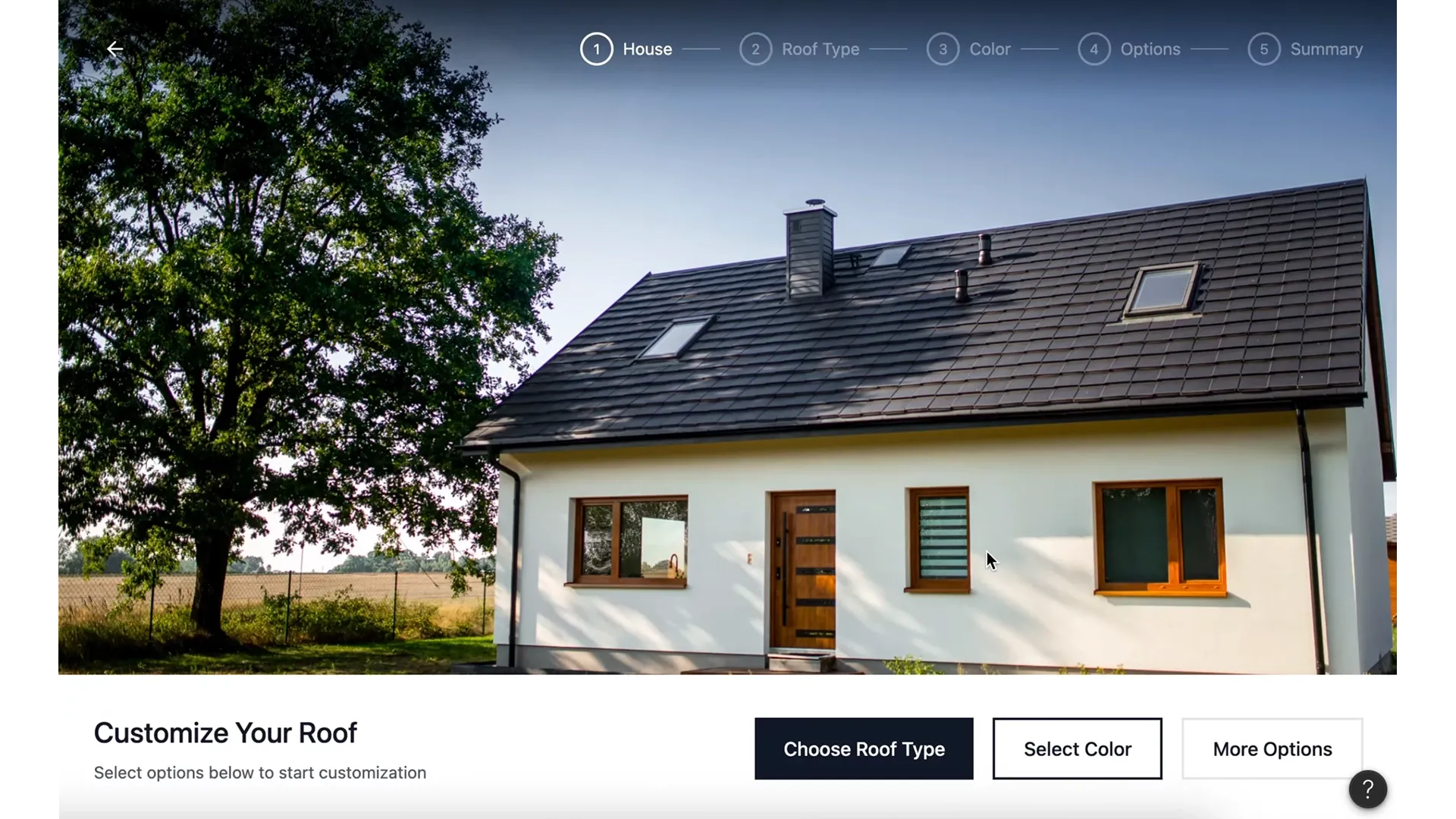
Today, customers choose roofing materials not only based on technical specifications or price. They also buy, first and foremost, the visual impact of their future home. This is why roofing manufacturers and suppliers are finding it increasingly difficult to sell through traditional catalogs, PDF files, and static photographs.
When a client opens a website, they want to see more than just the roofing color in isolation. They want to understand how the material will look on a real home, under the right lighting, with true shadows, reflections, textures, and depth. And the more realistic this visualization, the greater their trust in the product and the easier it will be to make a purchasing decision.
This is precisely why premium roofing material configurators are created using pre-render technology.


What is a pre-rendered configurator?
The basis of this solution is a full-fledged 3D scene, which is created in advance by designers and 3D artists.
Unlike conventional online configurators, where the browser tries to render a 3D model in real time, this one uses a different approach:
- a detailed 3D scene of the house is created;
- materials, environment and professional lighting are configured;
- high-end rendering is performed;
- After this, the scene is cut into finished high-quality images;
- and the configurator itself dynamically switches between prepared options of materials and colors.
Thanks to this, the user receives an image at the level of an advertising render or architectural visualization, rather than a standard “online configurator”.
This is especially important for roofing materials, where the perception of color, texture, coating depth, glare, and shadows directly influences the desire to purchase the product.
Why this approach seems significantly more expensive and realistic
Most online configurators are limited by browser performance.
To make the system work quickly, it is necessary to simplify:
- geometry of objects;
- texture quality;
- lighting;
- reflections;
- shadows;
- detailing of materials.
As a result, the user receives a “technical visualization” that demonstrates functionality but does not evoke an emotional effect.
The configurator works differently on pre-render scenes.
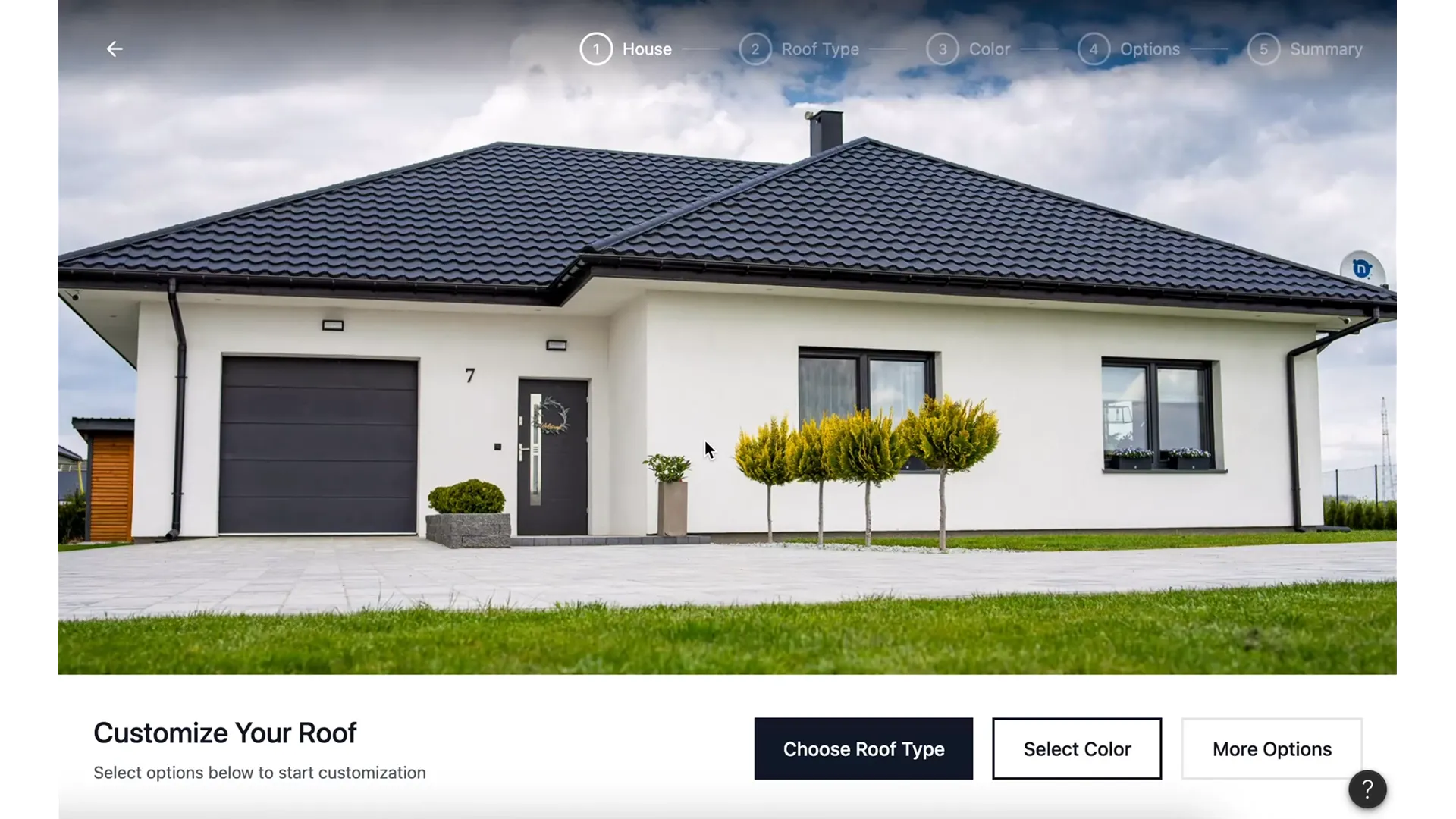
Because images are prepared in advance, quality is virtually unlimited by the user's device performance. This allows:
- use photorealistic materials;
- create soft cinematic lighting;
- convey the depth and volume of the roof;
- show complex textures of metal, tiles and coatings;
- create the feeling of a real architectural photograph.
Essentially, the client sees not just a color selection, but a finished, premium-level marketing visual.
This is why this approach is often used in the automotive industry, architectural visualization, premium real estate, and high-end eCommerce.
Maximum customer immersion in the product
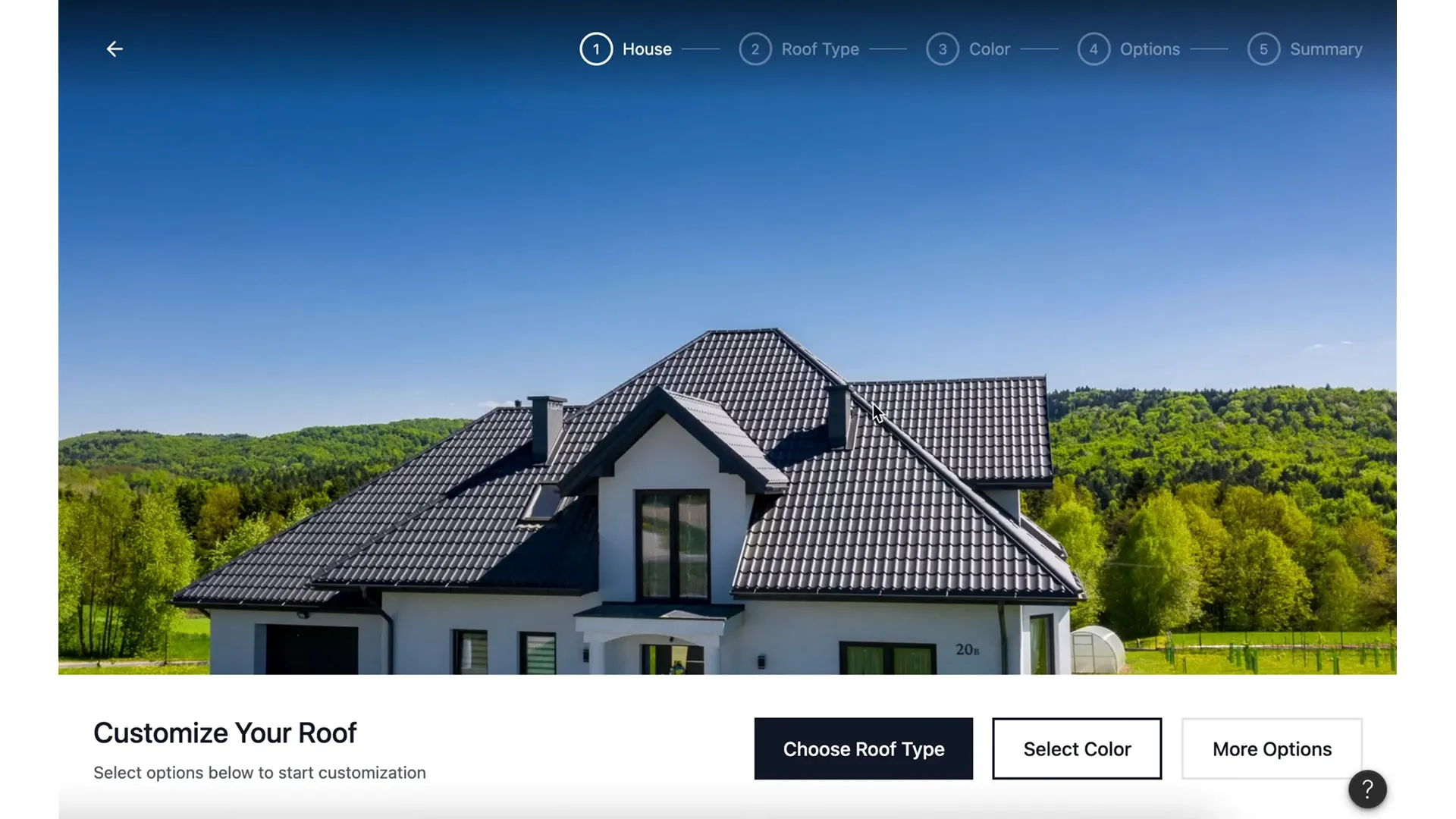
When a user sees roofing material on a real property, they begin to associate that house with their future project.
This is critical for decision-making. Standard color palettes and small samples don't provide a clear understanding of the final result. It's difficult for the client to visualize:
- how the roof will look on a large house;
- how the material behaves under different lighting conditions;
- how harmoniously the color matches;
- What does the coating texture look like from a distance?
The configurator solves this problem. The client literally "tests" the roofing on real objects and begins to emotionally engage with the product. And emotional engagement directly impacts conversion and sales.
This configurator isn't just a visualization. It's a sales tool.
The premium configurator can perform several tasks simultaneously:
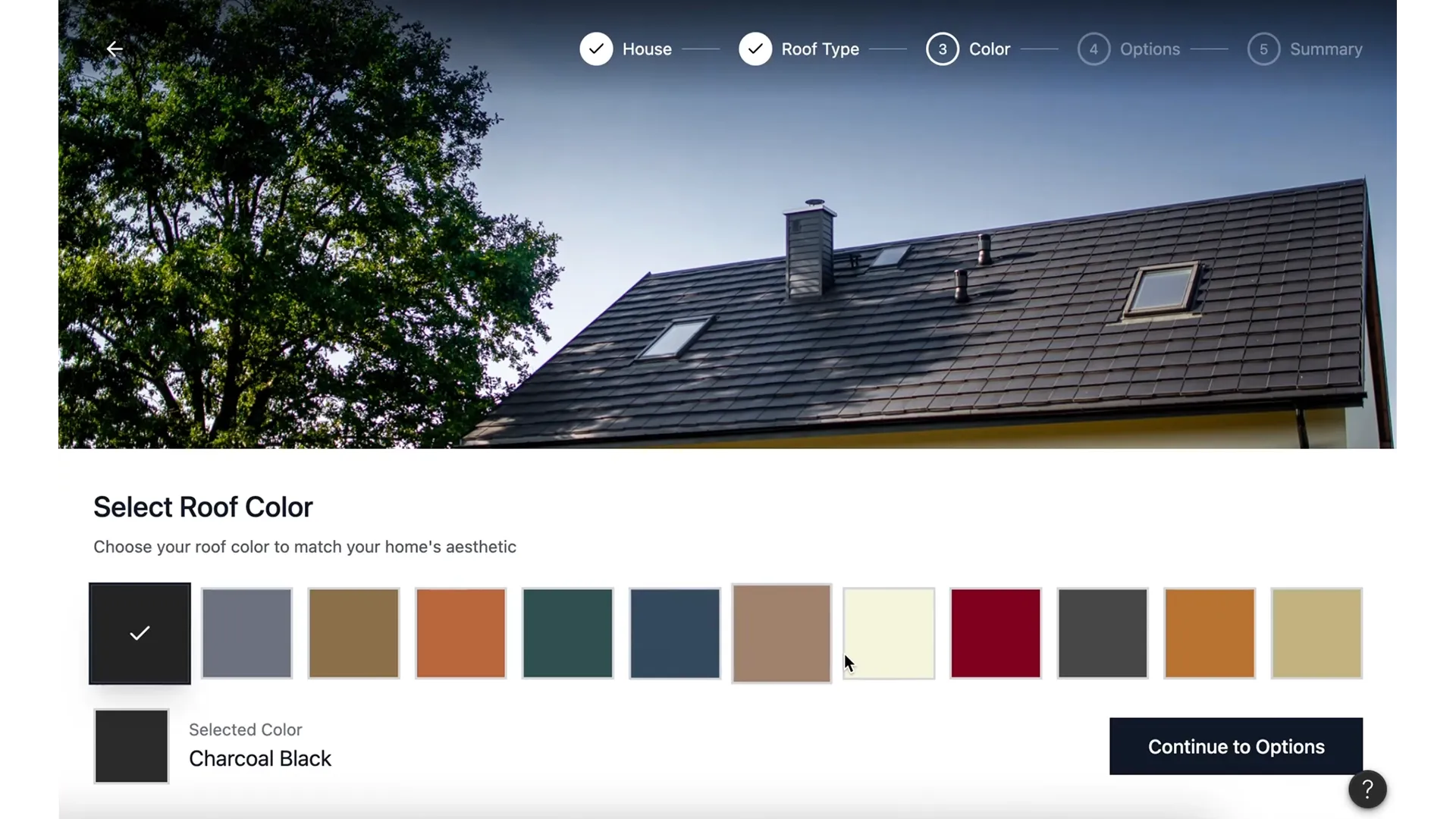
1. Product demonstration
Display of various roofing types, colours, coverings and additional elements.
2. Increasing engagement
The user spends significantly more time on the site, interacting with the object.
3. Simplifying the choice
The client quickly understands which option is right for him.
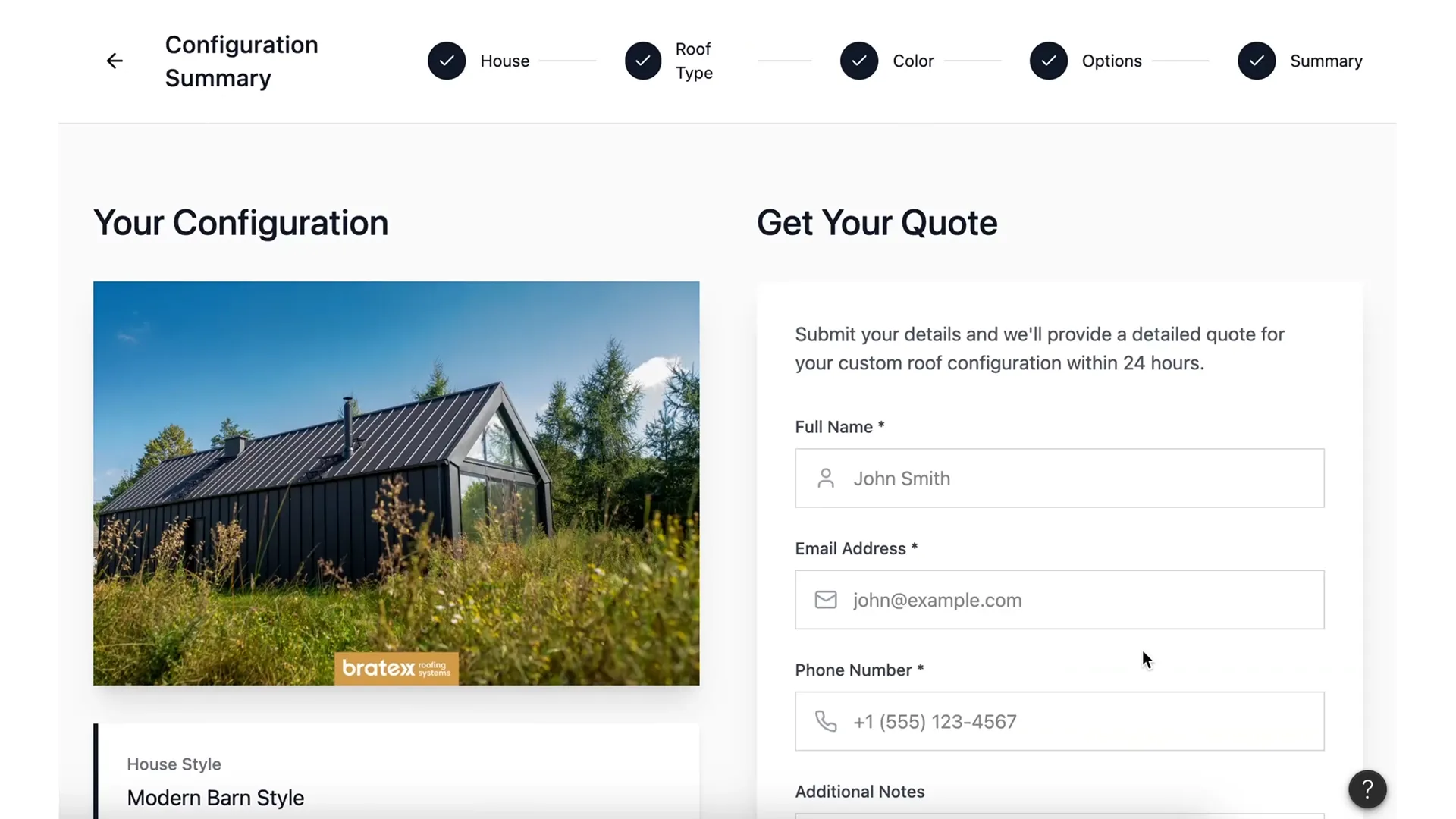
4. Generating applications
After selecting a configuration, the user can:
- leave a request;
- send the project to the manager;
- get a quote;
- create an order.
5. Integration with CRM
All selected parameters can be automatically transferred:
- to the CRM system;
- managers;
- in Telegram;
- by email;
- to the site's administrative panel.
This allows you to turn a simple catalog browsing into a full-fledged digital sales funnel.
Where this approach works especially effectively
These configurators are particularly well suited for:
- metal tile manufacturers;
- composite roofing manufacturers;
- manufacturers of standing seam roofing;
- roofing system suppliers;
- architectural companies;
- construction brands;
- premium building materials.
A particularly strong effect is achieved in segments where visual perception plays a key role and the client makes decisions emotionally.

Why this provides a marketing advantage
Most competitors still use: PDF catalogs, color palettes, ordinary photographs, simple configurators with low-quality graphics.
Against this backdrop, the premium pre-render configurator feels completely different. It creates a feeling:
- brand technology;
- high quality products;
- modern approach;
- premium level of the company.
And this directly impacts customer trust. When users see high-quality visualizations, they automatically transfer this perception to the product itself.
Yes, this approach requires more preparation. But that's precisely what creates the premium effect.
Creating such configurators really requires:
- development of professional 3D scenes;
- material settings;
- lighting settings;
- preparing angles;
- rendering of all combinations;
- organization of image structure.
But it is precisely thanks to this preparation that a level of quality is achieved that is impossible to achieve in a regular browser-based real-time configurator.
This isn't just an investment in a "color picker." It's an investment in digital product presentation and sales.

If your goal is to show roofing materials as realistically as possible
If you are looking for a way:
- stand out from the competition;
- improve the visual quality of the presentation;
- create the effect of an expensive product;
- increase customer engagement;
- improve website conversion;
- give the client the opportunity to “see the future home” —
Then a premium configurator based on pre-render visualization can become one of the most effective solutions for your company.
This approach allows us to transfer the quality of architectural visualization and advertising CGI directly into the online catalog, transforming the simple process of choosing a roof into a complete visual experience for the client.
Useful materials
- Development of a roof configurator
- Development of a designer for curtains, blinds, and roller shutters
- Development of an online designer for windows, doors, and partitions
- Development of a configurator for gates and fences
- Development of a configurator for construction and architecture
- 3D configurators + AI + CPQ increase conversion rates for custom product sales.
- Configurator vs. Designer: What's the Difference?
- CRM for the furniture business: a working combination of AvadaCRM + configurator + AI assistant
- How to choose a technology for the online configurator: PNG, SVG, or Canvas/WebGL


